

The thing that finally made me take my oral health seriously wasn’t a flossing lecture from my dentist — I’d become exceptionally skilled at ignoring those. It wasn’t a crown that cost $1,800, though that didn’t help.
It was a study reporting that researchers had found a bacterium commonly associated with gum disease — in the brain tissue of Alzheimer’s patients.
Given that all of the information gathered on this blog is only as effective as a consistent application of the habits over time, I’ve decided to lay everything out chronologically, as it unfolds over the course of any single day.
This routine has become second nature to me. Even though schedule — and middle-aged forgetfulness — often preclude a habit or two, I’ve already reaped incredible dividends over the weeks and months of consistent repetition.
Let’s go back to last week’s sunrise wake/walk episode. I’ve tiptoed out of bed, and made my way into the bathroom.
After failing to pee neatly, I’m standing at the sink marveling at the architecture of my bed-head thinking, as I do every day, that I need a haircut. I’ve got a toothbrush in my hand, and I’m about to do something I’ve never done correctly: my oral hygiene routine.
For decades, my version of this was: brush, rinse, leave — one minute on a generous morning. Maybe.
What broke the arrangement was the Selfaissance. One of the first deep dives I took as I started excavating my health was the microbiome — the broader realization that our bodies host something in the range of 38 trillion bacterial cells at any given moment, and that the ecosystem we maintain inside us has consequences vital to our heath and longevity.
I started with the gut, which is very much in vogue these days — pre- and pro-biotics, the gut-brain connection, GLP-1 drugs, inflammation, all the fun stuff. I quickly realized that you can’t really understand the gut microbiome without going upstream to where digestion begins.
In a 2019 paper in Science Advances — that I read twice in a single sitting — a team of researchers had found Porphyromonas gingivalis — the keystone pathogen in chronic gum disease — consistently present in the postmortem brain tissue of Alzheimer’s patients.
They also found that concentrations of the bacterium’s toxic enzymes, called gingipains correlated directly with the same protein tangles that are a hallmark of Alzheimer’s.
In mice, oral infection with the same bacterium led to brain colonization and increased production of the plaques long associated with Alzheimer’s.
The paper’s title used the phrase “evidence for disease causation.” The researchers themselves were careful to note that more work was needed, but their data was not ambiguous.
I have had mild gum disease for most of my adult life. I know this because my dentists have been notifying me, politely, for decades, and I have been nodding, and promising to floss, and doing nothing of the sort. Reading the Science Advances paper in the middle of my mid-life-crisis was a noisy wakeup call.
The gum-brain connection is broader and more complex than a single study. A 2024 systematic review and meta-analysis found that individuals with periodontal disease had a 22% elevated risk of dementia compared to those with healthy gums.
In contrast, a 15-year prospective cohort of older men in Northern Ireland — one of the most heavily adjusted studies to date — found no significant association between clinical periodontitis and dementia onset once confounders like cardiovascular disease were accounted for. What it did find was that keeping more of your teeth was protective, and that men who declined had higher inflammatory markers.
That's the actual state of the evidence: a real signal across populations, a plausible inflammatory mechanism, and at least one rigorous study that should keep us honest about how much we don't yet know.
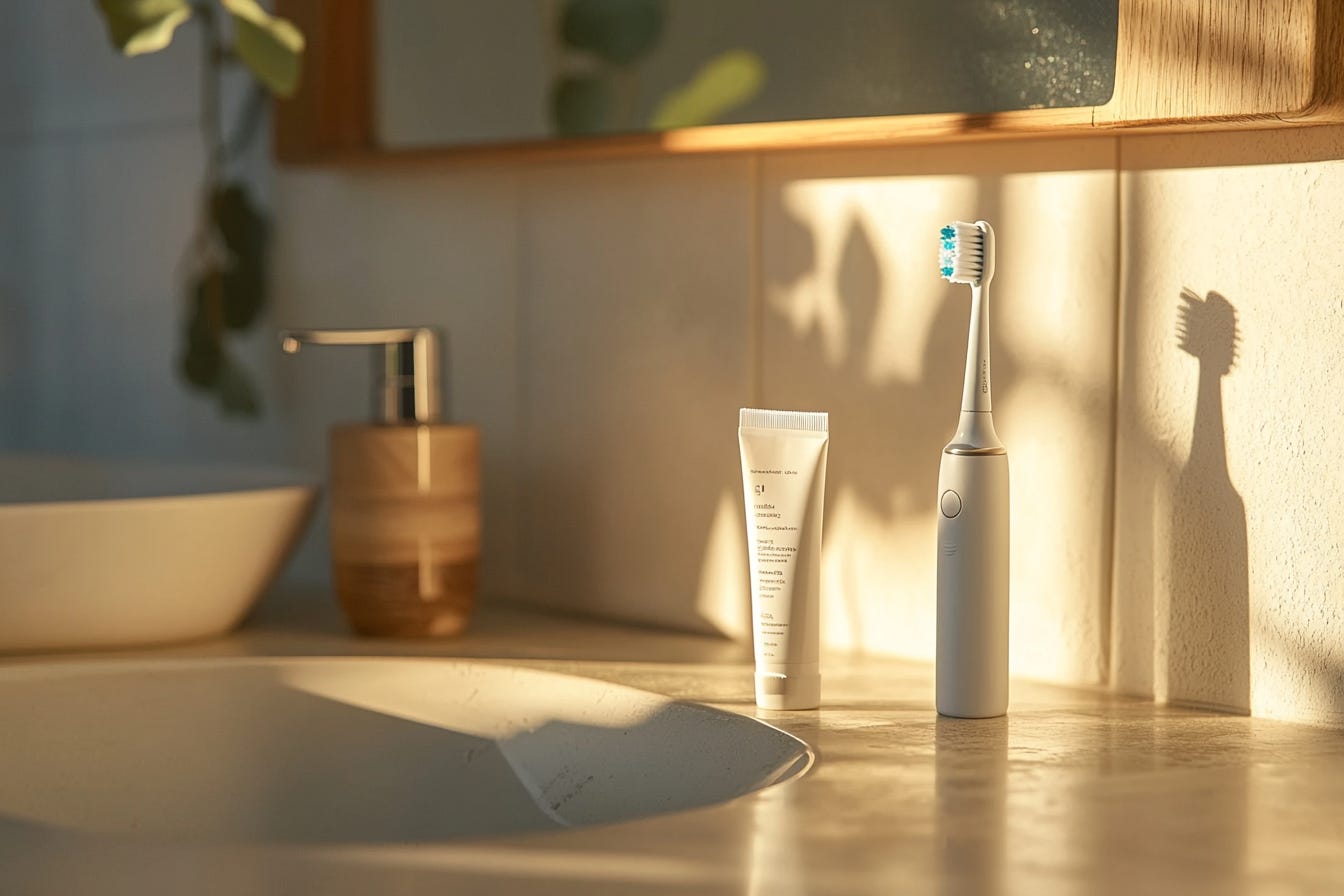
The routine I now run is built on a dual-toothpaste principle that I want to be upfront about: it’s my synthesis, grounded in the mechanisms of each individual product, but not something you’d find in a clinical guideline. There is no study to back this specific approach, just an overabundance of hubris and far too much time on my hands.
Having said that, it’s been working great for me so far, though your mileage may vary.
TOOTHPASTE
Stannous fluoride toothpaste is the best established tool for killing oral bacteria. This is different than sodium fluoride, which is what most of us grew up using. Stannous fluoride is a different compound, and head-to-head randomized trials show it produces meaningfully greater reductions in gingivitis, gum bleeding, and inflammation.
Meanwhile hydroxyapatite toothpaste contains the mineral that enamel is made of — it integrates into microscopic surface defects and supports remineralization of the softening enamel that the day's acid exposures caused.
Unlike stannous fluoride, hydroxyapatite is thought to be gentler on the beneficial oral bacteria. Using fluoride twice a day may disrupt more of the total oral microbiome than necessary — so we’re using it to kill the bad actors in the morning, then using hydroxyapatite to let the beneficial microbiome stabilize overnight.
NEVER RINSE
After brushing make sure to spit but never rinse. Britain’s National Health Service (NHS) specifically recommends spitting out excess toothpaste and not rinsing, because rinsing dilutes the fluoride and reduces its preventive effect.
As a result, you may end up ingesting a tiny amount of fluoride. For an adult using a normal pea-sized amount, this is generally not a concern. A 2024 study found that a no-rinse method increased fluoride retention in the mouth for up to 30 minutes and did not significantly affect systemic fluoride levels or toxicity markers.
Young children should continue to rinse. Kids are more likely to swallow toothpaste, and too much swallowed fluoride during tooth development can contribute to dental fluorosis. CDC guidance says everyone over the age of 3 should use no more than a pea-sized amount, and children under 3 should use only a rice-grain-sized smear.
TOOTHBRUSH
I use an oscillating-rotating electric toothbrush; a 2024 meta-analysis comparing oscillating-rotating, sonic, and manual toothbrushes found that oscillating-rotating produced a 72% transition rate to gingival health, versus 54% for sonic and 21% for manual.
DENTAL FLOSS
Believe it or not, PFAS (forever chemicals) in dental floss are a real concern, especially with some “glide,” “smooth,” or PTFE/Teflon-style flosses. But don’t stop flossing; just switch to a PFAS-free option.
A 2019 study found that women who reported using Oral-B Glide had higher blood levels of PFHxS, a PFAS (forever) chemical, than non-users. The study was observational, so it does not prove floss caused the higher PFAS levels, but it raised a legitimate concern. More recent consumer testing has found very high organic fluorine, a screening marker for PFAS, in some floss products. (note: Oral-B stated that Glide has since been reformulated, but this has yet to be independently verified)
I avoid floss labeled or marketed as: PTFE, Teflon, Glide, Smooth Slide, Shred-resistant polymer, or Extra-slippery tape-style floss. Not every slippery floss necessarily has PFAS, but that category is where the concern is highest.
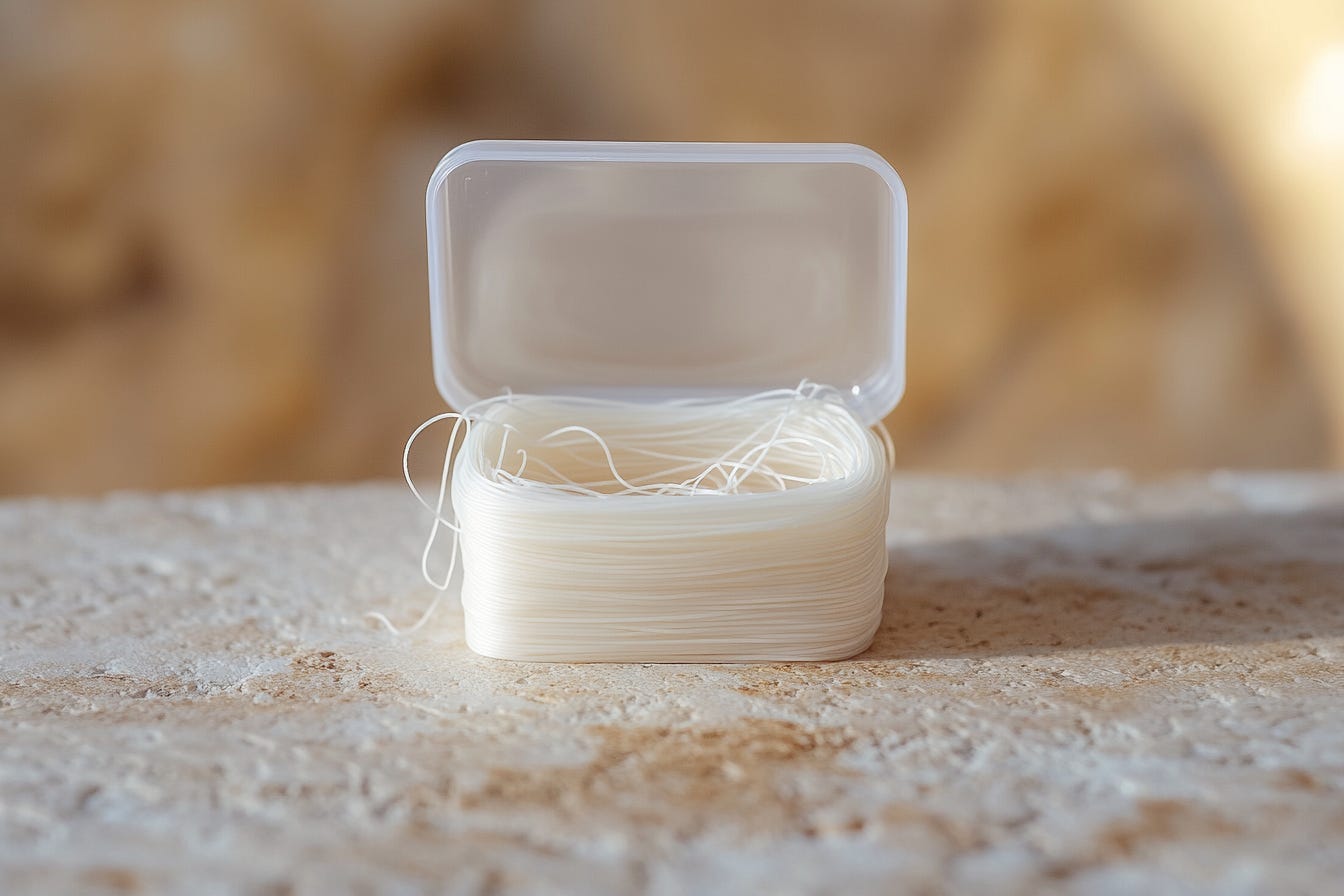
My family and I have tested over a dozen different PFAS/PTFE-free flosses over the past year. Nylon. Silk. Bamboo. Waxed. To say that they hated most of them would be an understatement. They either hurt or fray between your teeth or leave a waxy residue that requires, you guessed it, dental floss to remove.
Thankfully — after much griping and cursing at me — we found a brand that holds together and feels the closest to traditional floss.
XYLITOL
Multiple systematic reviews have confirmed that the sweetener xylitol significantly reduces counts of Streptococcus mutans — the primary decay-causing bacterium. The evidence for xylitol’s effect on actual cavity rates at the population level is more contested.
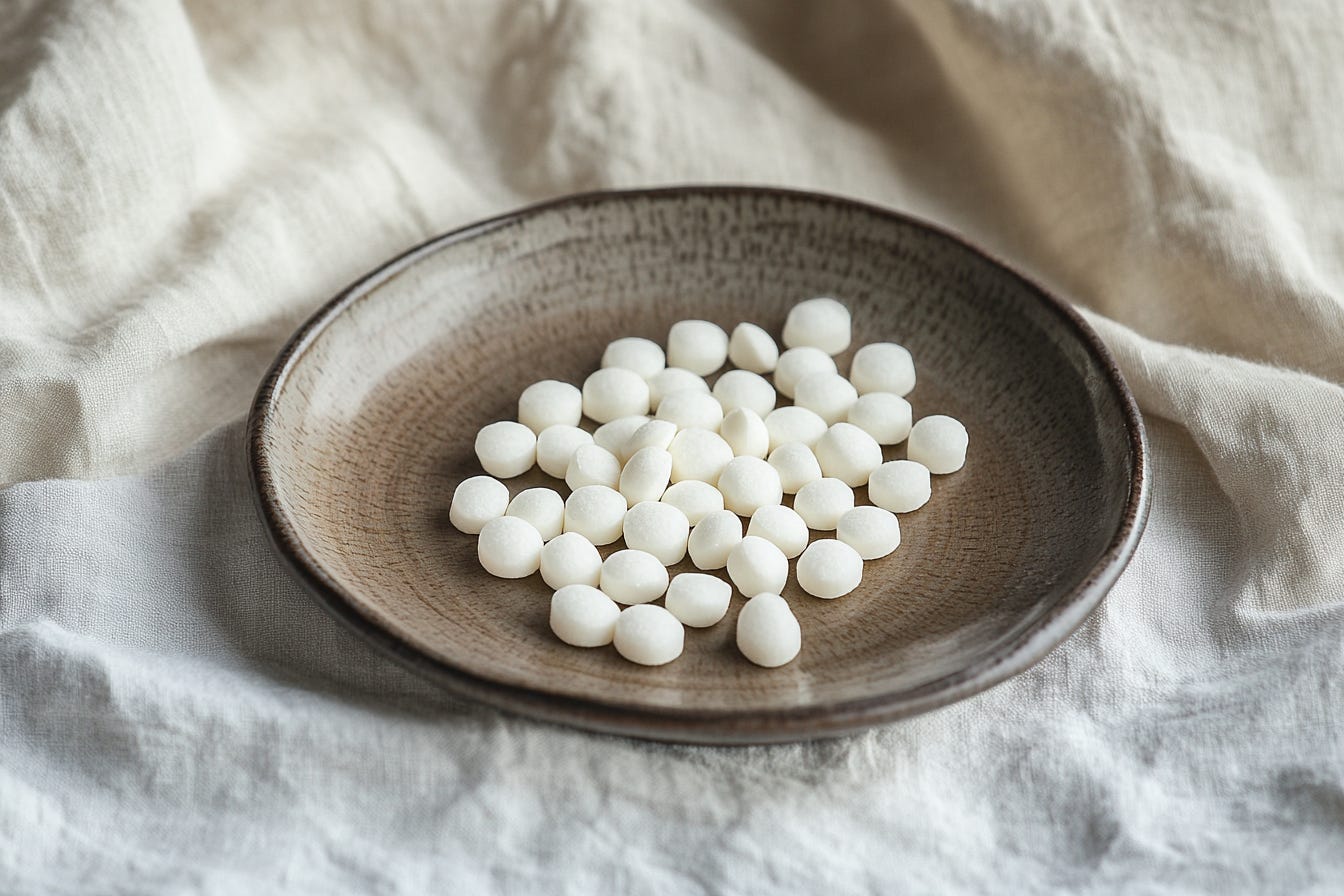
I use xylitol mints specifically for post-meal bacterial disruption, not as a cavity cure, and the evidence for that specific purpose is solid. I also chew several pieces of xylitol gum throughout the day to keep it going.
What I Actually Do
Morning (before the sunrise walk):
I brush my teeth with Parodontax Complete Protection stannous fluoride toothpaste using an Oral-B Pro 1000 electric oscillating-rotating brush, soft bristles, held at 45 degrees to the gumline. The target is the gumline, not the tooth surface. Light pressure. Oral-B makes two fancier versions of this toothbrush: the iO Series 2 which incudes a pressure sensor and two-minute timer, and the iO Series 5 with a connected app and bluetooth, though they brush exactly the same as the cheaper Pro 1000.
After two minutes spit only. No rinsing. Wait at least 30 minutes (one sunrise walk later) before eating.
Throughout the day:
Many Xylitol mints give funky breath, but I found a Finnish brand that work great — i have 1 after each meal, letting it fully dissolve in my mouth. I also chew 3 to 4 pieces of Xylitol gum interspersed throughout the day, when I can remember. The timing actually matters more than the total quantity as the goal is to continually disrupt the post-meal bacterial response, not to ingest it around the clock.
Night:
Before anything else, I floss first with Dr. Tung’s Smart Floss. For the dentaly ambitious you can floss in the morning as well, but once a day is enough and night is the higher-value slot because you’re heading into a low-salivary-flow period where debris trapped between teeth has more time to do damage.
Then brush for two minutes with RiseWell hydroxyapatite toothpaste. Spit. Done.
Everything on my list requires a functioning brain. That is not a metaphor — it is the operational constraint that makes dementia the most feared item in the catalog of aging outcomes, and the one that most of us are slowest to take seriously in our daily behavior.
A solid dental routine is, among other things, a hedge against that outcome, costing nothing except a rinsing habit I had to unlearn, and a flossing habit that I have, like a real life grownup, finally succumbed to. Plus my breath is spectacular.
Studies Cited
Dominy SS, Lynch C, Ermini F, et al. Porphyromonas gingivalis in Alzheimer’s disease brains: evidence for disease causation and treatment with small-molecule inhibitors. Science Advances. 2019 Jan 23;5(1):eaau3333. DOI: 10.1126/sciadv.aau3333
Dibello V, Custodero C, Cavalcanti R, et al. Impact of periodontal disease on cognitive disorders, dementia, and depression: a systematic review and meta-analysis. GeroScience. 2024 Oct;46(5):5133–5169. DOI: 10.1007/s11357-024-01240-z
Farsi DN, Abadalkareem R, Linden GJ, et al. Periodontitis and incident cognitive decline and dementia: a 15-year prospective cohort study of older men residing in Northern Ireland. Journal of Alzheimer’s Disease. 2026;109(2):980–995. DOI: 10.1177/13872877251401563
Zou Y, Grender J, Adam R, Levin L. A meta-analysis comparing toothbrush technologies on gingivitis and plaque. International Dental Journal. 2024 Feb;74(1):146–156. DOI: 10.1016/j.identj.2023.06.009 (P&G-funded; low risk of bias per authors; P&G conflict of interest disclosed)
Parakaw T, Srihirun S, Dararat P, Ruangsawasdi N. Kinetics of fluoride after brushing with the no-rinse method. BMC Oral Health. 2024 Sep;24(1):1050. DOI: 10.1186/s12903-024-04807-4
Geisinger ML, Geurs NC, Novy B, et al. A randomized double-blind clinical trial evaluating comparative plaque and gingival health associated with commercially available stannous fluoride-containing dentifrices as compared to a sodium fluoride control dentifrice. Journal of Periodontology. 2023 Sep;94(9):1112–1121. DOI: 10.1002/JPER.22-0675
Boronow KE, Brody JG, Schaider LA, Peaslee GF, Havas L, Cohn BA. Serum concentrations of PFASs and exposure-related behaviors in African American and non-Hispanic white women. Journal of Exposure Science & Environmental Epidemiology. 2019. DOI: 10.1038/s41370-018-0109-y (Note: Oral-B Glide has since been reformulated; independent verification of PFAS-free status pending)
Nasseripour M, Newton JT, Warburton F, et al. A systematic review and meta-analysis of the role of sugar-free chewing gum on Streptococcus mutans. BMC Oral Health. 2021 Apr 29;21(1):217. DOI: 10.1186/s12903-021-01517-z
Söderling E, Pienihäkkinen K. Specific effects of xylitol chewing gum on mutans streptococci levels, plaque accumulation and caries occurrence: a systematic review. BMC Oral Health. 2025 Jul 29;25(1):1275. DOI: 10.1186/s12903-025-06602-1
Some links in this post are affiliate links, meaning I earn a small commission if you purchase through them at no extra cost to you. I only link to products I actually use myself. Not products I’ve been sent, not products I’ve been paid to mention — products that have earned a place in my own routine after my own research. The commission helps keep this publication going. The recommendation is the same either way.
I’ve been experimenting with not rinsing after brushing to no avail. I have an electric toothbrush, water pic flosser & use Dr. Bronner’s toothpaste. Coupled with quarterly check-ups, my oral hygiene routine is in good shape. I was interested in the science of using two different toothpaste products. TY.