

“It ain’t what you don’t know that gets you into trouble. It’s what you know for sure that just ain’t so.” —often attributed to Mark Twain
I pulled into a Starbucks drive-through a few months ago and ordered a “venti soy latte” — a sentence I’m genuinely ashamed to write, and one that has never made me feel whiter or more milquetoast — but I requested it without the plastic stirrer. I felt good about this. Informed, even. I knew that when hot liquids interact with plastic, the plastic interacts right back, shedding microparticles into whatever you’re drinking. No stirrer for this guy. I was protecting my milquetoast self.
The girl at the window asked why. When I blessed her with my knowledge of plastic micro shedding, she smiled patiently then put me in my proper place. “The stirrer is nothing,” she said.
“The real source of plastic isn’t the tiny stick — it’s the lining of the entire cup.”
I sat in my car for a long moment, holding my VSL (venti soy latte —abbreviating still doesn’t excuse it) realizing I’d been worrying about the garnish while ignoring the building.
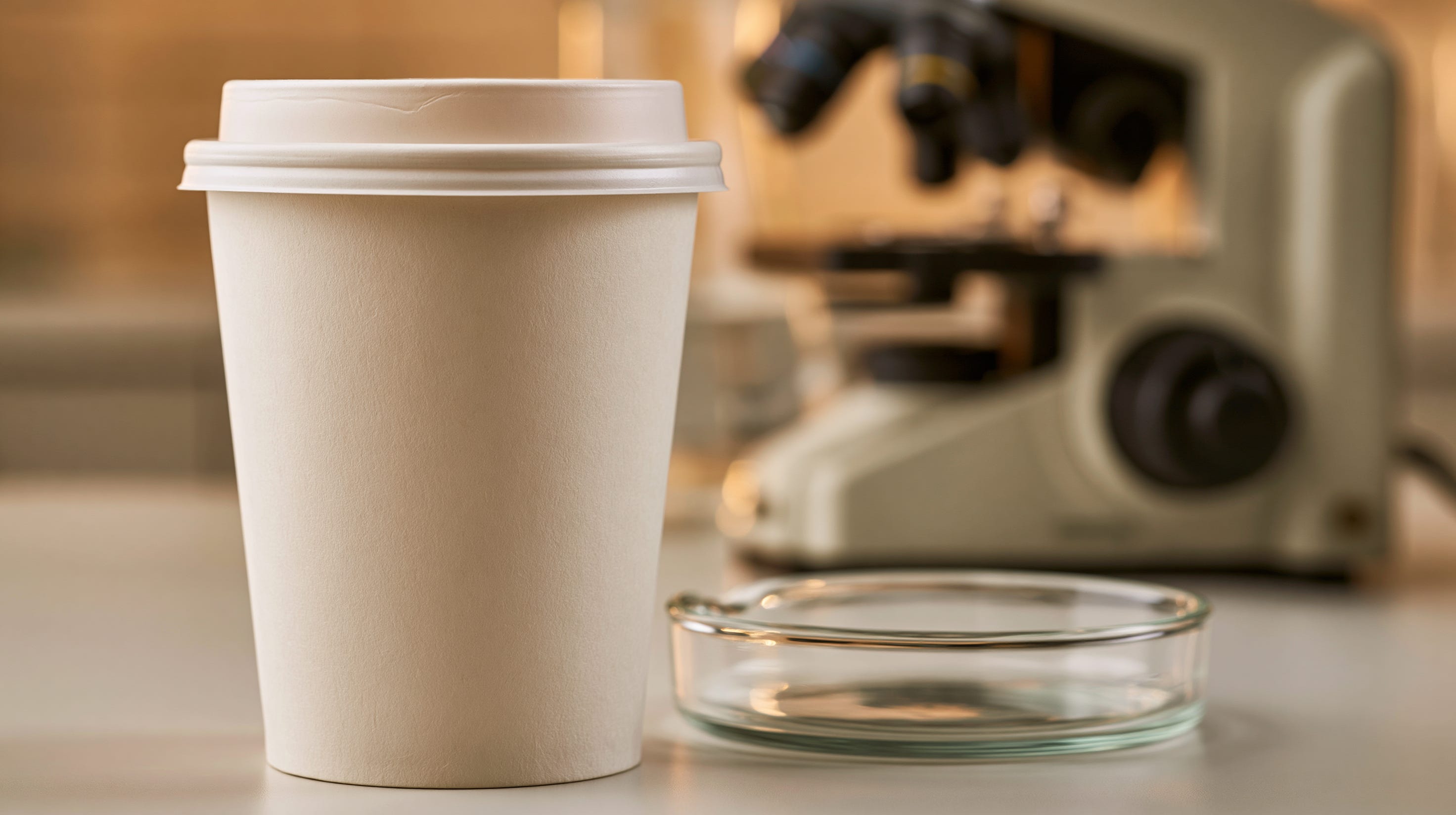
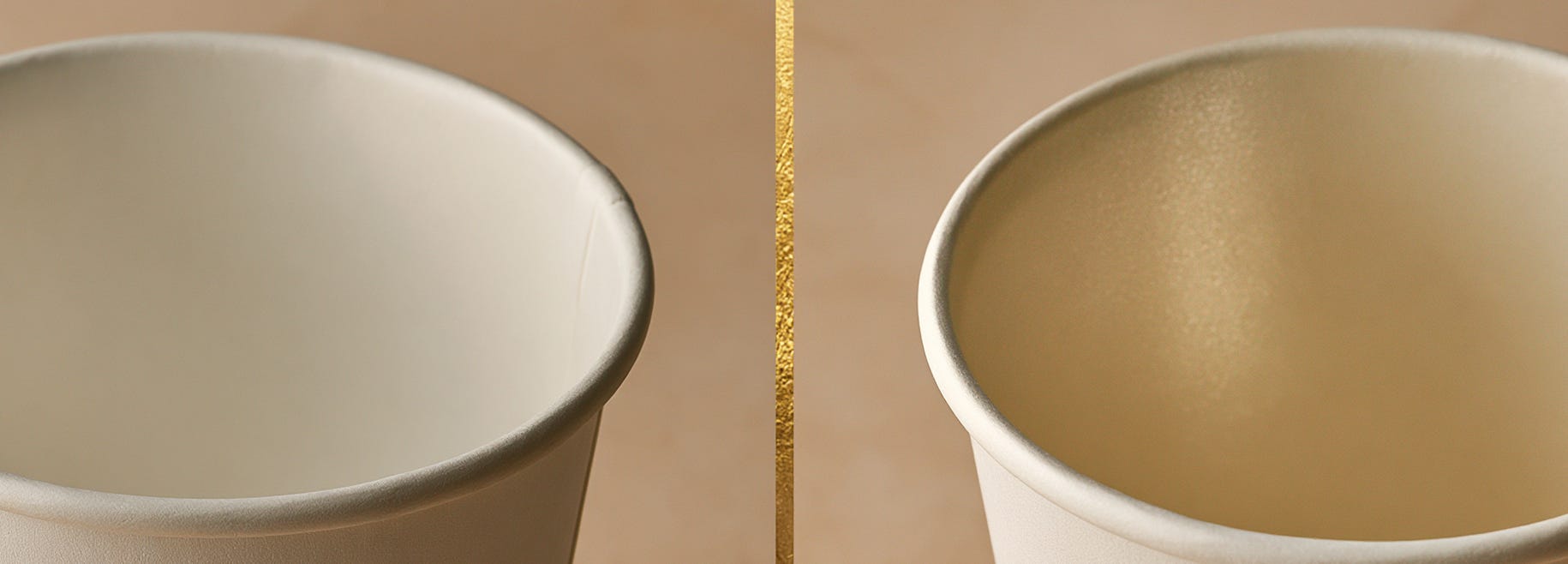
Hours of rabbit holes later — she was dead right. Every paper to-go cup — Starbucks, Dunkin’, the place on the corner — is lined with a thin layer of polyethylene, a petroleum-based plastic that keeps the hot liquid from dissolving the paper. Without it, your cup would disintegrate in minutes. That lining is roughly five percent of the cup by weight. And when you pour scalding coffee into it, it starts to break down.
Researchers at the Indian Institute of Technology Kharagpur found that hot water left in a standard paper cup for fifteen minutes released approximately 25,000 microplastic particles per 100 milliliters. A venti Starbucks coffee cup is almost six times that volume. Three cups a day, every day, and you’re ingesting quantities of plastic that would sound made up if they weren’t in a peer-reviewed journal.

Why should you care what happens to them once they’re inside you? Because in March 2024, the New England Journal of Medicine published the first study directly linking micro- and nanoplastics found in human arterial plaque with cardiovascular outcomes.
Researchers analyzed plaque removed from the carotid arteries of 304 patients and found that those whose plaque contained detectable plastics had a significantly higher risk of heart attack, stroke, or death over nearly three years of follow-up.
Important caveat: this is an association, not proof that the plastics caused the events — and some researchers have raised legitimate questions about possible sample contamination. But the signal was strong enough to land in the NEJM, which does not publish hunches.
Now here’s the part that should piss us all off…
In May 2025, Starbucks rolled out a redesigned cup across ten European countries that replaces the polyethylene lining with a mineral-based coating made from silicon dioxide — developed by an Italian company called Qwarzo. Same cup. Same logo. No plastic lining. Home compostable. Widely recyclable. Starbucks described the change as compliant with the EU’s Packaging and Packaging Waste Regulation, which takes binding effect in August 2026 and is pushing companies to eliminate plastic from food-contact packaging.
In the United States? Same polyethylene-lined cup they’ve been using for decades. No announcement. No timeline. To be clear, this isn’t a Starbucks hit piece. They’re a business responding to regulatory pressure, which is exactly what businesses do. But it also means that—
Right now, in an American drive-through, you’re drinking from a cup the Germans, Italians, French, Swedish and other countries deem unsafe for human use.
What I Actually Do
After an afternoon of research I bought a Klean Kanteen Reflect — stainless steel, bamboo cap, food-grade silicone. Three materials. No plastic, no paint, no coating of any kind. Thirty-three bucks. It’s not insulated, which means the outside gets surface-of-the-sun-hot when you fill it with coffee — I wrapped a wide rubber band around the middle and that solved it. Worth the tradeoff for a full stainless steel interior with nothing between the metal and your drink. I hand it through the drive-through window and they pour it right in.
Something I just now learned researching this article: if you want insulation, Klean Kanteen’s TKWide line paired with the Insulated Wide Loop Cap gives you double-wall vacuum insulation and a full stainless steel interior — your drink never touches plastic. Most of the other TKWide caps contain plastic components, so the specific cap matters. Look for the Insulated Wide Loop Cap. I just ordered mine.
The specific brand matters less than the principle: if you drink hot beverages every day, stop renting a plastic-lined paper cup and start owning a vessel that doesn’t shed into your bloodstream.
Then again, if, every morning, you’re saying out loud the words, “Venti soy latte,” maybe you deserve a microplastic or two.
Studies Cited
Raza, Syed Khalid Mustafa, et al. “Microplastics and other harmful substances released from disposable paper cups into hot water.” Journal of Hazardous Materials, 406, 124680 (2021).
Marfella, R., et al. “Microplastics and Nanoplastics in Atheromas and Cardiovascular Events.” New England Journal of Medicine, 390(10), 900–910 (2024).
Great info here. I’ve been concerned about microplastics for quite some time. Wondering why our FDA isn’t adopting European standards? It’s probably a cost factor. Just googled my Corkcicle cup.
Great info and problem solving. And you made me laugh… VSL milquetoast ✌️