

The pan goes on the stove before I take off my shoes.
That’s not a metaphor — I’ve actually timed it — two eggs, softly scrambled, are on my plate seven minutes after returning from my sunrise walk. The sequencing is intentional. So is everything else about this meal.
What I Actually Do
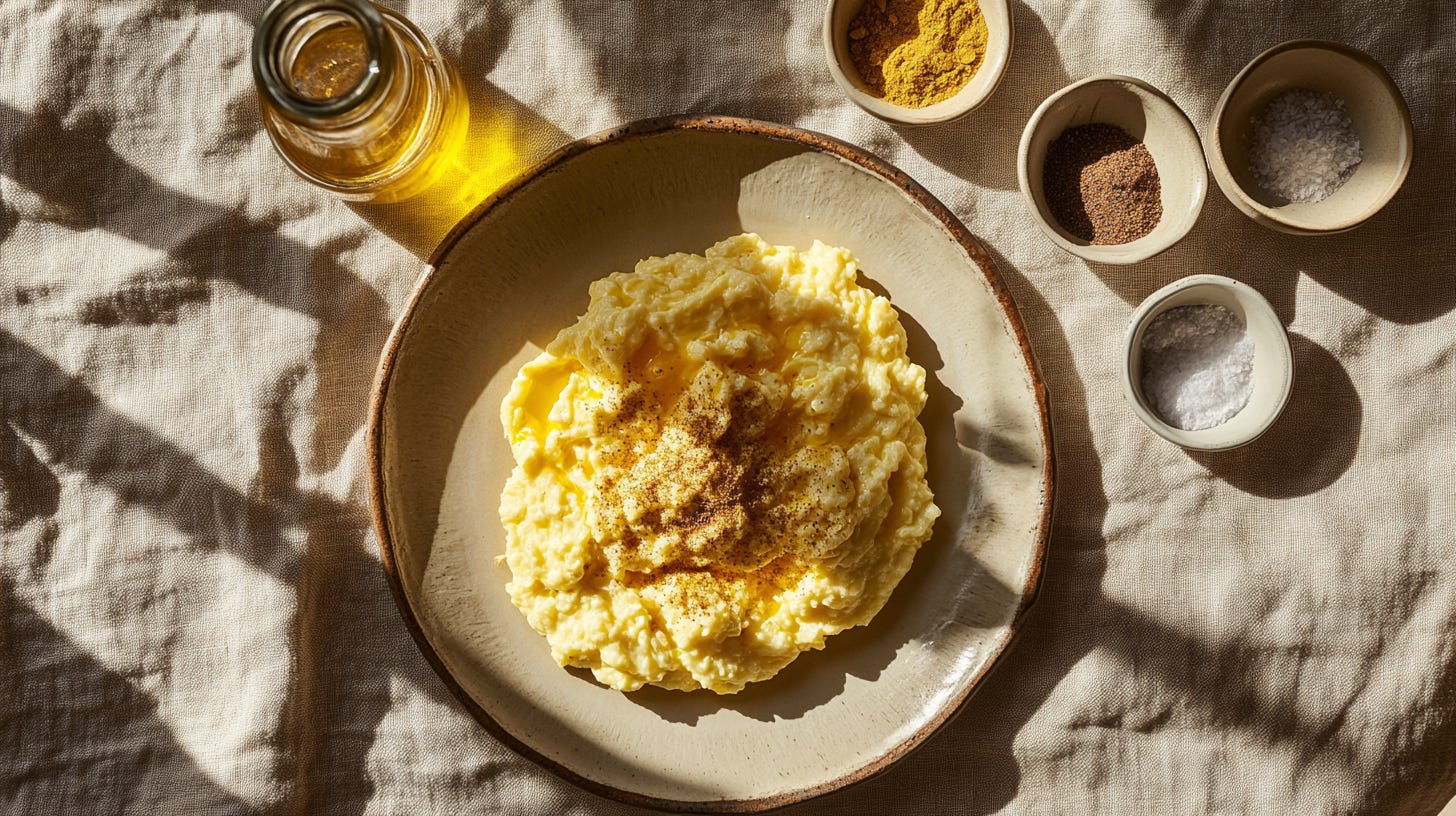
A tablespoon of extra virgin olive oil in a well-seasoned, non-stick carbon-steel pan on low heat. I crack two organic, pastured eggs before the oil has fully warmed and keep the whole thing moving continuously with a silicone spatula — no hard edges, nothing rubbery. Before they begin to firm up, I mix in about a teaspoon of a spice mix I keep next to the stove in a glass spice jar:
1/8 tsp freshly ground black pepper
1/4 tsp turmeric
1/4 tsp garlic powder
1/8 tsp ground ginger
The curds are still wet when I pull them from the pan. The 1/2 tsp of sumac goes on after plating. The whole thing is eaten before the rest of my breakfast. Protein first. This is not an accident.
Down the Rabbit Hole
Extra virgin olive oil contains oleocanthal, a polyphenol compound that inhibits COX-1 and COX-2 enzymes — the same anti-inflammatory mechanism as ibuprofen, delivered at low doses with every meal. A landmark 2005 paper in Nature (Beauchamp et al.) identified this, and the compound’s concentration correlates directly with the oil’s polyphenol content, which is why quality matters. Butter raises LDL; EVOO reduces it — and evidence from RCTs shows it does so without lowering HDL.
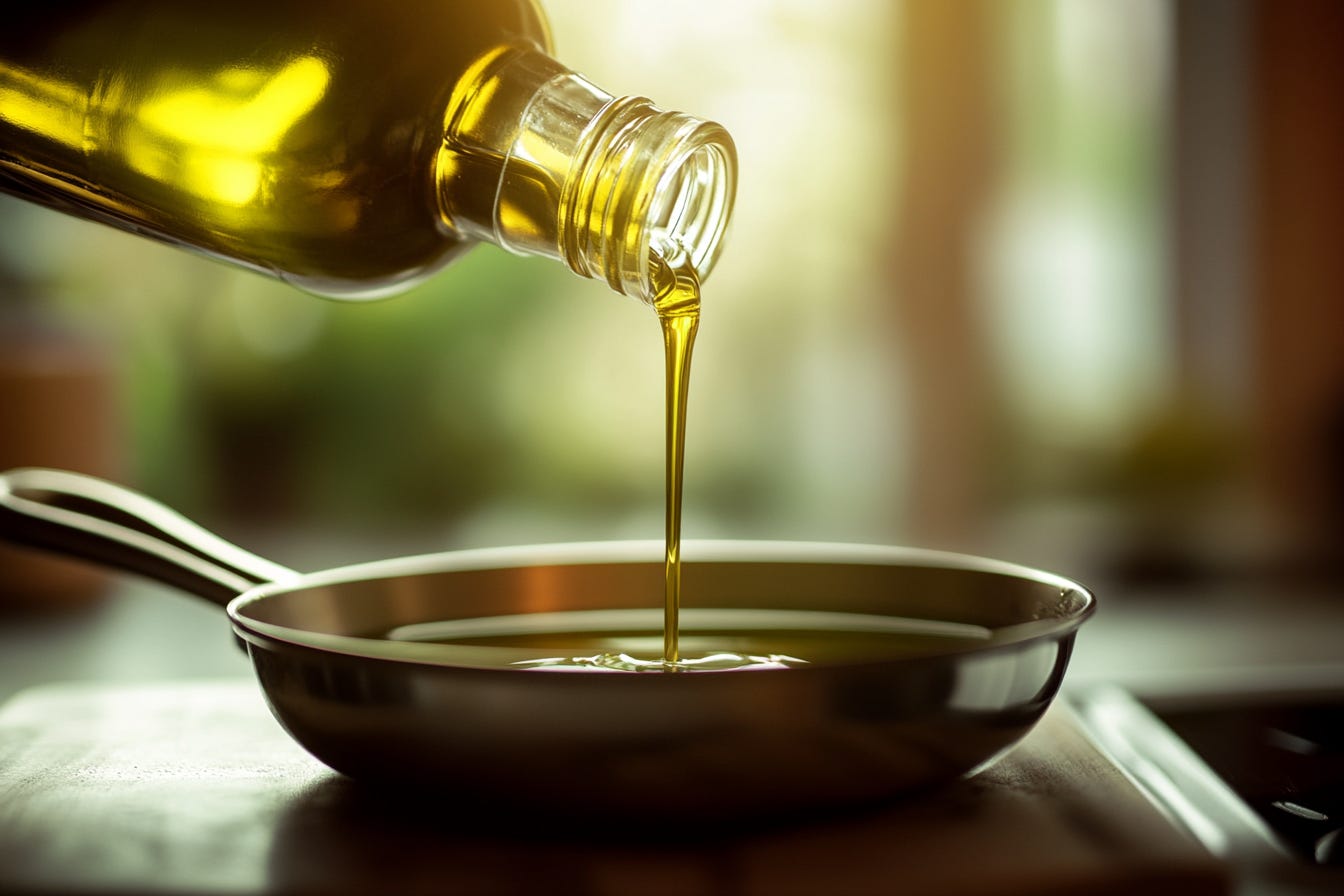
In the context of the Mediterranean dietary pattern, EVOO is consistently associated with reduced cardiovascular risk across large-scale trials. At the low heat I use for scrambled eggs, there’s no oxidation concern. There is much more to say about olive oil, which I’ll save for a later post, but this EVOO is the tested and certified high-polyphenol brand I use daily.
On eggs and the cholesterol myth—
The fear around dietary cholesterol is one of the more durable errors in nutrition science.
For decades, the assumption held that eating cholesterol raised blood cholesterol — a hypothesis that has largely collapsed under scrutiny.
A comprehensive umbrella review and meta-analysis published in January 2025 in Nutrition, Metabolism and Cardiovascular Diseases — one of the most thorough analyses to date — found that while egg consumption produces modest increases in both LDL and HDL cholesterol, it has no significant effect on the LDL/HDL ratio. That ratio is what actually predicts cardiovascular risk. The same review found no association between egg consumption and cardiovascular outcomes or all-cause mortality.
On pastured eggs versus the other kind—
Not all eggs are built the same — this is not a marketing claim, it’s a measurable nutritional reality. A 2010 Pennsylvania State University study found that—
—pastured hens produce eggs with roughly twice the vitamin E and twice the omega-3 fatty acids of caged hens, along with significantly higher levels of beta-carotene and vitamin A.
The omega-6 to omega-3 ratio in conventional eggs can run as high as 20:1. In pastured eggs, it falls closer to 2:1 or 3:1. Since chronic omega-6/omega-3 imbalance is associated with systemic inflammation, you’re making a meaningfully better choice when you buy the expensive carton.
On the spice mix (and why the combination matters)—
Four spices go into the pan while the eggs are still liquid.
Ginger’s gingerols and shogaols are anti-inflammatory compounds that inhibit some of the same pathways as ibuprofen — without the gastrointestinal toll.
Garlic powder delivers sulfur compounds linked to modest cardiovascular benefits and improved immune function.
Turmeric’s curcumin is one of the most-studied anti-inflammatory compounds in the human diet, with a substantial body of evidence on oxidative stress and inflammatory markers.
But the reason black pepper and turmeric belong together is a synergy most don’t know about. Piperine — the active compound in black pepper — increases curcumin absorption by up to 2,000%. That figure comes from a 1998 clinical study published in Planta Medica, and it has held up. A small pinch of black pepper next to turmeric is a massive pharmacokinetic upgrade.
On the sumac—
Sumac — Rhus coriaria, the deep red powder I finish the eggs with — has one of the highest measured antioxidant capacities of any culinary spice, with an ORAC value around 312,000 per 100 grams. A 2025 systematic review and meta-analysis found that supplementation at 3g/day or more for more than six weeks produces meaningful reductions in oxidative stress markers and improvements in insulin resistance. A separate 2025 dose-response meta-analysis focused specifically on high-sensitivity CRP confirmed statistically significant reductions in this key inflammatory marker across multiple randomized controlled trials.
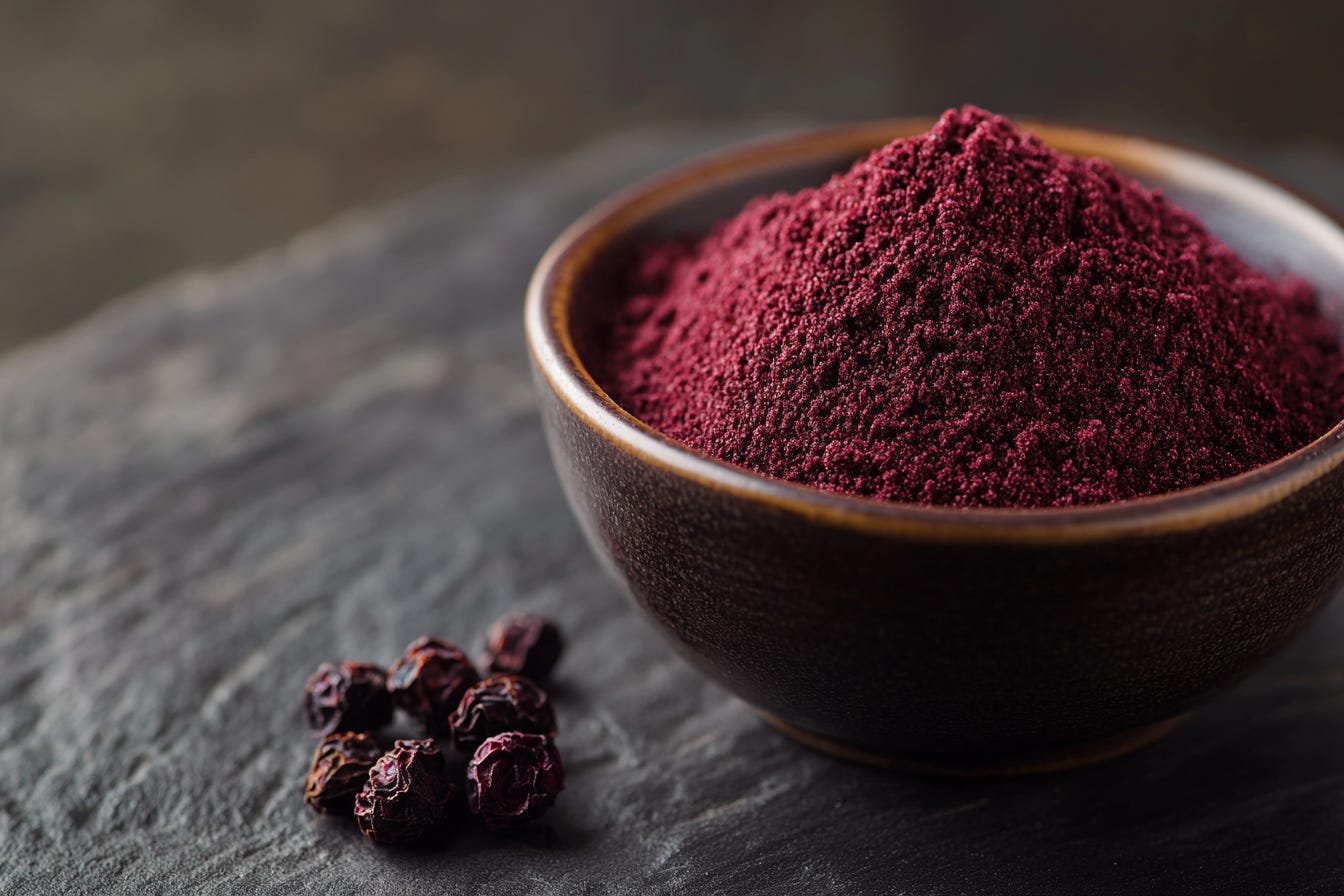
Sumac degrades when exposed to heat, so we sprinkle it on after plating. I love the flavor, it adds a citrusy brightness that works. The anti-inflammatory data is what made me start, but now I can’t eat eggs without it.
Why eat eggs first—
A body of research from Weill Cornell’s Comprehensive Weight Control Center, led by endocrinologist Alpana Shukla, has established that the sequence in which you consume the components of a meal produces significantly different metabolic outcomes — even when total calories and macronutrients are identical.
Eating protein and vegetables before carbohydrates blunts postprandial glucose spikes by more than 40%.
A 2025 paper in Diabetes Care confirmed that carbohydrates-last food ordering improves continuous glucose monitor time-in-range and reduces glycemic variability.
Protein first is a meaningful metabolic decision that costs nothing to make.
Verdicts
Two eggs, pastured if you can find them. Cook ‘em low and slow. Don’t fear the cholesterol story — the ratio is what counts, and eggs don’t move it against you. Spice them well. The sumac is doing more than it looks like. And whatever else you’re having at any meal, eat the protein first.
The bucket list items that matter most to me — the physical ones, the ones that require a body that actually works — don’t get done on the back of one good habit. They get done when enough unremarkable decisions compound over enough time.
I devour this every morning. Next week we’ll get to the rest of the breakfast.
Studies
Beauchamp GK et al. (2005). “Phytochemistry: Ibuprofen-like activity in extra-virgin olive oil.” Nature, 437, 45–46. https://doi.org/10.1038/437045a
Formisano E et al. [NMCD umbrella review] (2025). “Effect of egg consumption on health outcomes. Nutrition, Metabolism and Cardiovascular Diseases. https://www.nmcd-journal.com/article/S0939-4753(25)00003-1/fulltext
Karsten HD, Patterson PH et al. (2010). “Vitamins A, E and fatty acid composition of the eggs of caged hens and pastured hens.” Renewable Agriculture and Food Systems, 25(1), 45–54. https://www.cambridge.org/core/journals/renewable-agriculture-and-food-systems/article/abs/vitamins-a-e-and-fatty-acid-composition-of-the-eggs-of-caged-hens-and-pastured-hens/552BA04E5A9E3CD7E49E405B339ECA32
Shoba G et al. (1998). “Influence of piperine on the pharmacokinetics of curcumin in animals and human volunteers.” Planta Medica, 64(4), 353–56. https://doi.org/10.1055/s-2006-957450
[Sumac metabolic health systematic review] (2025). “Rhus coriaria L. and Human Metabolic Health: A Systematic Review and Meta-Analysis.” PMC12671535. https://pmc.ncbi.nlm.nih.gov/articles/PMC12671535/
[Sumac and hs-CRP dose-response meta-analysis] (2025). “Sumac (Rhus coriaria L.) Supplementation on High-Sensitivity C-Reactive Protein Concentrations in Adults: A Systematic Review and Dose-Response Meta-Analysis.” PMC12504994. https://pmc.ncbi.nlm.nih.gov/articles/PMC12504994/
Shukla AP, Iliescu RG, Thomas CE, Aronne LJ. (2015). “Food Order Has a Significant Impact on Postprandial Glucose and Insulin Levels.” Diabetes Care, 38(7), e98–e99. https://doi.org/10.2337/dc15-0429
Touhamy S et al. (2025). “Carbohydrates-Last Food Order Improves Time in Range and Reduces Glycemic Variability.” Diabetes Care, 48(2), e15. https://diabetesjournals.org/care/article/48/2/e15/157633/