

Here’s a story that makes me look “totally sane.” After I first moved to Los Angeles, in my 20’s, I house-sat a friend’s apartment for a few weeks while I got my footing. He was a working actor so was always away on film shoots. Sweet deal for me.
He had this huge bag of Hershey’s Cookies ‘n’ Creme mini-bars sitting in the cupboard. I love white chocolate, so I ate one. Then another. I didn’t decide to keep going, and yet, in a few hours, the entire two-pound bag was gone. That afternoon I went out and bought a replacement bag so my friend wouldn’t know.
The next morning, I bought another bag to replace the replacement bag.
I wasn’t actually hungry when I ate any of it. It felt more like the food itself had hijacked my brain. Years later, once I started actually reading the research, I found out that “hijacked” is a lot closer to the truth than I expected.
Breakfast is my favorite meal. Who am I kidding, every meal is my favorite meal, but especially breakfast — which for years consisted of American breakfasty things: toast, bagels, muffins, cheesy eggs, sugary cereals, fruit juice, bacon, hash browns, pancakes, etc. The yoozh.
And, throughout all those years, no matter how much I ate, I’d be pillaging the kitchen again within the next few hours and careening towards a post-sugar coma by early afternoon.
After many ignorant years of weight gain and IBS, I finally learned that — for me — a breakfast of protein, fiber, good fat and just a few, specific carbs for breakfast — kept my binge-prone brain from hijacking my diet and improved my life dramatically.
What I Actually Do
Breakfast is two courses, every morning: the spiced eggs from Daily Routine IV, then the chia skyr bowl. I get back from the sunrise walk with the chia seeds already thirty-plus minutes into their soak in homemade kefir — that’s where Daily Routine III left off.
NOTE: At first blush, this may seem like a lot. It’s routine for me now, so it feels easy, but go at your own pace. Work your way up to the kefir or flax if you need to.
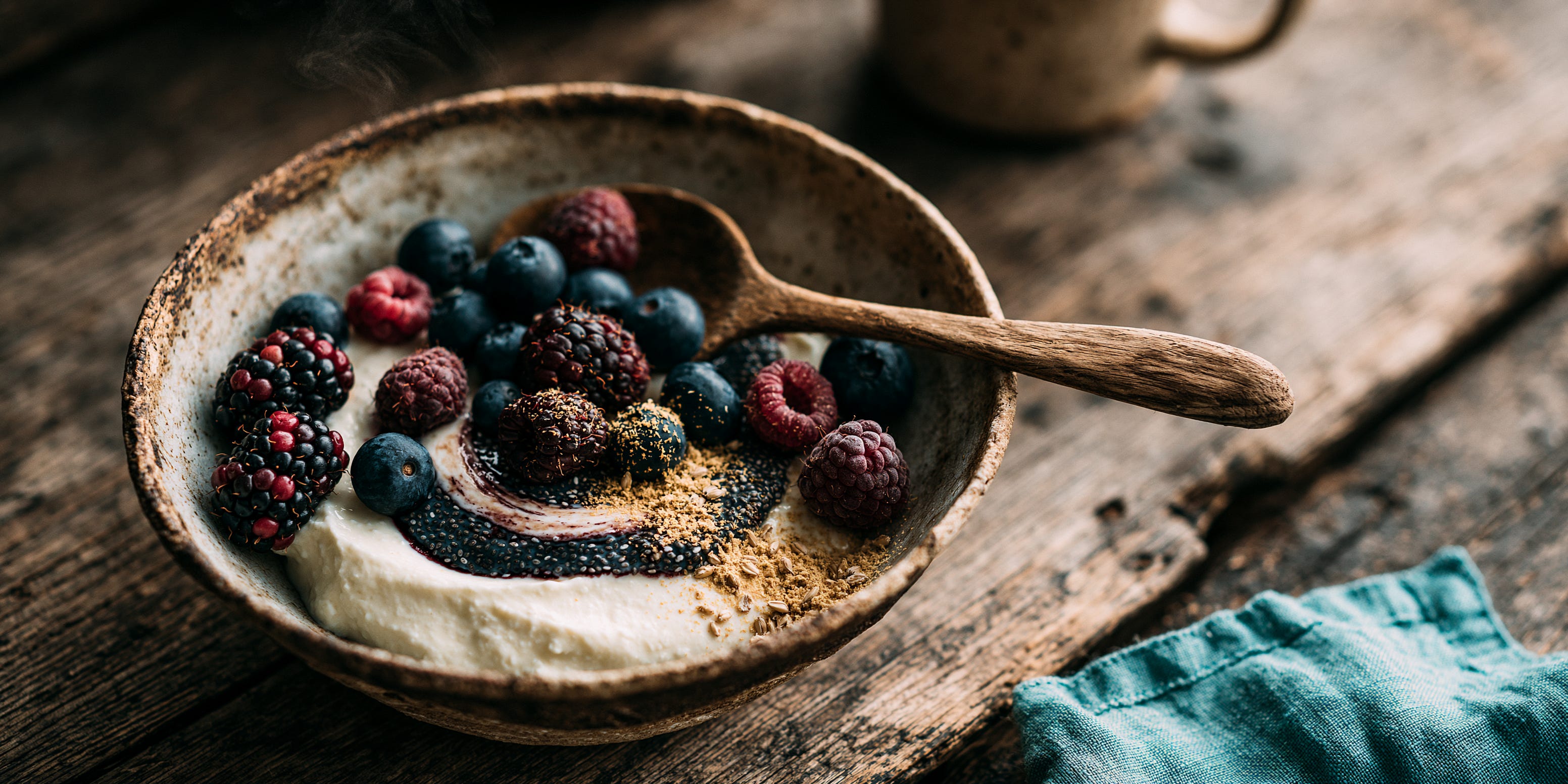
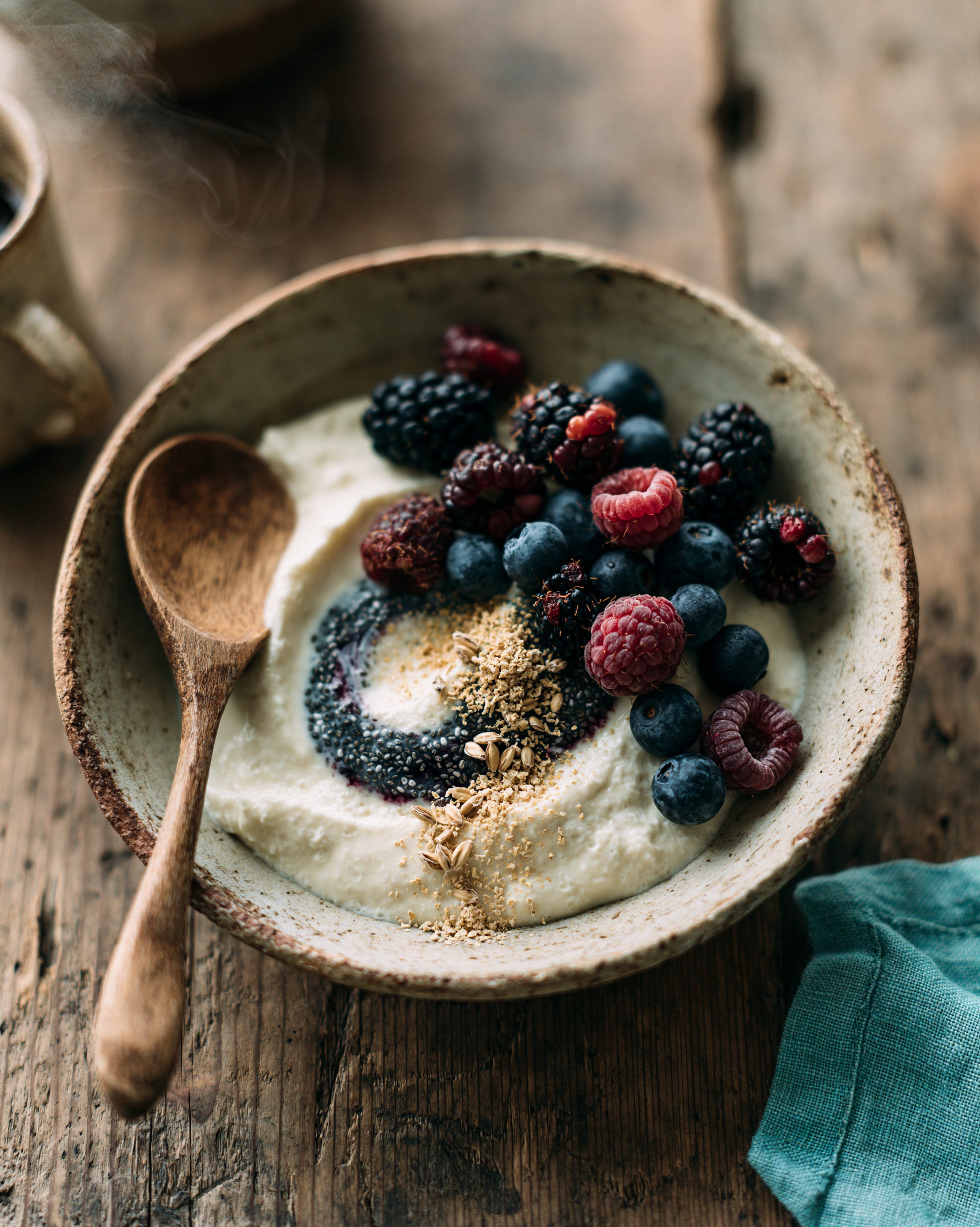
Here’s the full build for “The Chia Skyr Yogurt Bowl”:
The chia-kefir soak
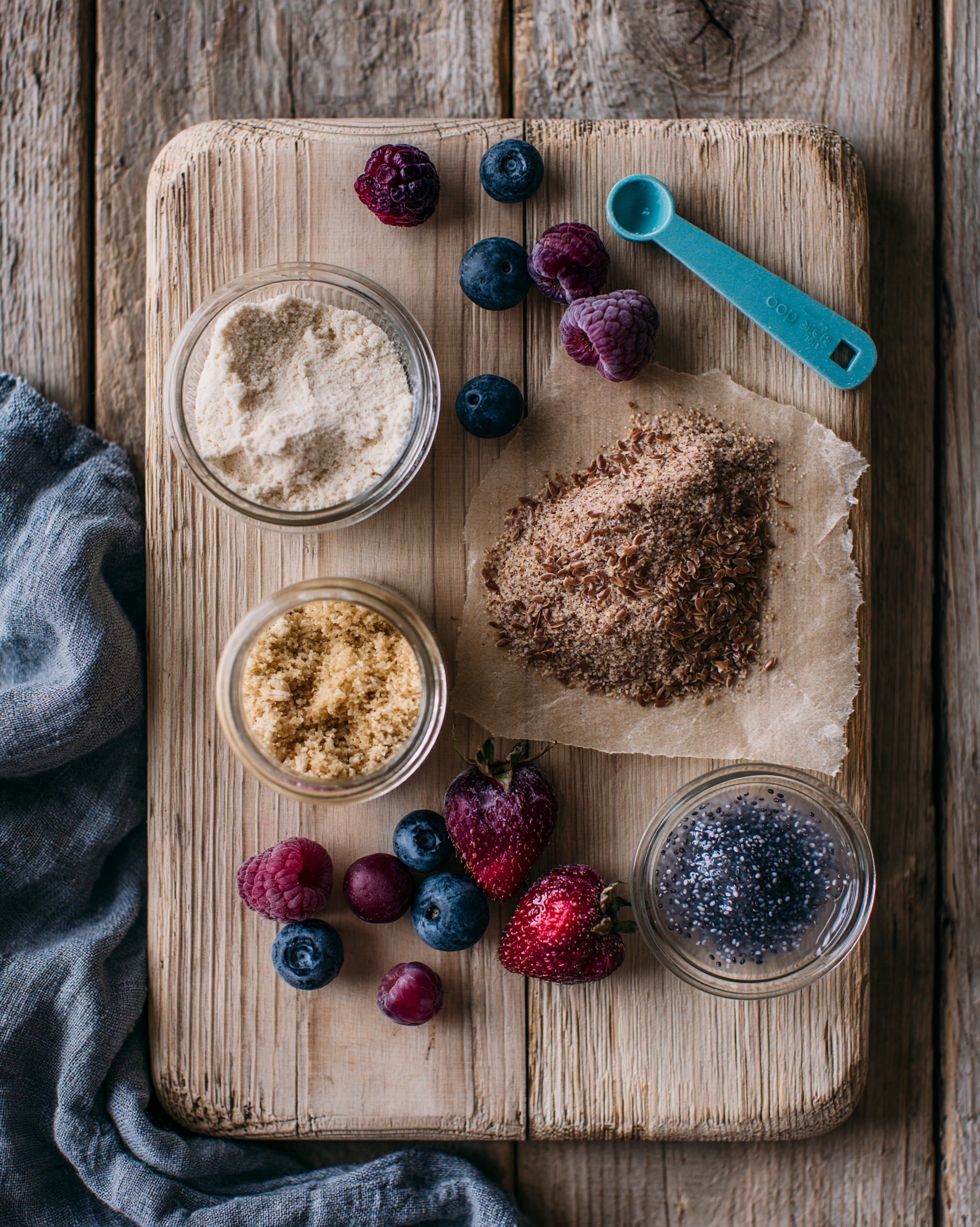
1 tbsp chia seeds, pre-soaked 30+ minutes in—
½ cup homemade kefir
1 cup skyr “yogurt”
Icelandic Provisions, Siggi’s, etc.
I use the low-fat version until I hit my goal weight, then will use full-fat
5g creatine monohydrate
3 tbsp of barley beta-glucan powder
2 tbsp ground flaxseed
Ground weekly in a nut grinder — any longer and it can go rancid
Stored in an amber, air-tight jar in the fridge
1 tsp Ceylon cinnamon(REMOVED! - see below)½ cup organic berries
black, blue, straw or rasp — on rotation
Everything goes in the bowl in that order — mix the skyr and chia-kefir soak first, creatine stirred through while the mix still cold enough to mask the texture and metallic after-taste, cinnamon/barley/flax folded in next, berries last so they don’t bleed into everything else.
So the rule became simple: protein and fat lead, carbs are along for the ride, and sugar in that specific fat-plus-sugar combination doesn’t get anywhere near my mouth at breakfast.
Science
The foundational data for protein and fat over carbs to curb appetite is Holt’s 1995 Satiety Index of Common Foods, which fed subjects isoenergetic portions of 38 different foods and tracked hunger over two hours.
Protein content correlated positively with satiety (“fullness”) scores. Fat, on its own, actually correlated negatively — because “protein and fat” aren’t interchangeable satiety tools working the same way. Protein’s effect on fullness is well-established and fairly robust. Fat’s contribution is more about slowing gastric emptying and being calorically dense, not about being independently more filling per calorie.
On the carb side specifically: a 2014 controlled trial found that a high-carbohydrate, low-fat breakfast produced an earlier post-meal glucose peak and crash, and that earlier crash predicted an earlier return of hunger, compared with a low-carb, high-fat breakfast. Sound familiar?
That’s the mechanism behind what I noticed, but it’s not universally settled — a 2025 study in Cell Metabolism directly tested the “glucose spike causes hunger” model and found that while high-glycemic meals did produce the expected glucose and insulin swings, they did not reliably produce more hunger or more eating afterward.
The honest read: the mechanism connecting carbs, glucose swings, and hunger is real, but individual response varies enough that a study can find the opposite of what you’d predict. “But everybody is different” isn’t a hedge — it’s the actual state of the science.
My nose-dive into those Hershey’s bags has a name in the research: hyper-palatable food. A 2019 study developed the first quantitative definition — foods that combine fat and sugar (or fat and sodium, or carbs and sodium) at ratios that essentially never occur together in nature.
These specific nutrient combinations activate the brain’s reward circuitry more strongly than either fat or sugar produces alone, and they do it in a way that overrides the normal signals that are supposed to tell you to stop eating.
That’s a mechanistic explanation, not an excuse — but it’s also not a lack-of-willpower story, which is the part I got wrong about myself for years. Stack that reward-circuit effect on top of the glucose-spike-and-crash pattern from the carbs above and you get something close to what happened in that apartment.
The better approach isn’t complicated, even if it took me years to actually implement it:
Keep hyper-palatable, engineered fat-and-sugar combinations out of the house, and default to foods where protein, fiber, and unprocessed fat are doing the work instead.
There’s no engineered fat-sugar ratio in skyr, kefir, nuts, and berries.
Skyr
What’s in this bowl is skyr, which is not actually yogurt — Siggi’s and Icelandic Provisions both make it with rennet, the same enzyme category used in cheesemaking, which is why food scientists classify it as a strained fresh cheese rather than a cultured yogurt, despite living next to the yogurt in every grocery case in America.
It’s made from skim milk, heated and cultured with live bacterial strains (traditionally heirloom cultures passed down for close to a thousand years in Iceland), then strained hard enough that it takes roughly four cups of milk to produce one cup of finished skyr.
The straining is what makes it useful here. Protein concentrates as whey is removed, landing skyr around 15-18g of protein per 150g serving — modestly ahead of most Greek yogurts at the same weight, and almost entirely casein, the slow-digesting milk protein that (unlike fast-digesting whey) releases amino acids into the bloodstream over hours rather than spiking and clearing quickly.
That slow release is doing real work in this bowl: it’s a big part of why protein-forward breakfasts hold off hunger longer than the Holt satiety data would predict from protein content alone, and it’s the reason skyr works better folded into a slow morning than as a pre-workout shake.
Beyond that, skyr is a dense source of calcium, phosphorus, B12, and zinc, it carries live bacterial cultures into a gut that benefits from the traffic, and — the reason it earned a spot in this bowl over a shake or a bar — it’s slow, filling, and doesn’t ask me to trust my own portion control the way the Hershey’s bag did.
Creatine
Creatine monohydrate combined with resistance training is one of the best-supported supplement interventions in sports nutrition. A meta-analysis specific to adults over 50 found that creatine supplementation during resistance training produced greater gains in lean tissue mass and muscular strength than resistance training alone.
The International Society of Sports Nutrition’s position stand — the closest thing this field has to a consensus document — concludes creatine is both safe and effective for increasing strength and lean mass when paired with training.
Five grams a day, which is what’s in this bowl, is the standard maintenance dose used across nearly all of this research. (Separately, there’s an emerging and genuinely interesting body of research on creatine and cognition — modest effects on memory and processing speed, no clear effect on executive function — but that’s not the reason it’s in this bowl, and I’m not going to borrow that evidence to justify a decision made for a different reason.)
Creapure is the closest thing this category has to a real purity standard: a single, patented, tightly controlled manufacturing process independently verified. I use this brand.
Barley Beta-Glucan and Cholesterol
While oat bran has been the traditional source of beta-glucan, barley beta-glucan carries its own FDA-authorized cholesterol claim after five clinical trials consistently showed lower total and LDL cholesterol from whole-grain and dry-milled barley products at a threshold of ≥3g/day.
In the large intestine, it acts as food for beneficial gut bacteria, promoting a healthy microbiome. This breakdown produces short-chain fatty acids that fuel colon cells and trigger the production of satiety hormones like glucagon-like peptide-1 (GLP-1).
CeraBeta is a 100% non-GMO barley beta-glucan concentrate. Three tablespoons delivers 3.0g — the full clinical threshold in a single serving, alongside 5g of total dietary fiber, 2g of protein, and about 39 calories. That’s a meaningfully higher concentration than you’d get from oat bran, which runs closer to 5-6% beta-glucan by weight.
One disclosure that belongs in this section regardless of the cholesterol claim: barley contains gluten. Anyone with celiac disease or a gluten sensitivity needs to know that before this bowl becomes a daily habit, independent of anything beta-glucan does for their lipids.
Ceylon Cinnamon
Why Ceylon cinnamon specifically, and not the cassia cinnamon found in most grocery stores? This is actually an important safety choice. Cassia cinnamon — the common variety — contains substantially more coumarin, a compound that’s toxic at high intakes.
HOWEVER…
While researching this article, I discovered that almost every brand of Ceylon and cassia cinnamon have been third-party tested and found to include concerning amounts of heavy metals including lead, cadmium, mercury and arsenic — even brands that claimed to be “verified non-detect for all metals” were contaminated.
Lead Safe Mama, a community-funded, third-party, product testing site states the following:
“Conclusion: While Cinnamon may have historically had health-protective properties / beneficial qualities, the contamination levels ubiquitous in modern Cinnamon products likely entirely negate any potential health benefits (at best), and regular consumption of modern Cinnamon (regardless of the type of Cinnamon — but including Ceylon Cinnamon) is more likely to cause harm than to impart benefits.”
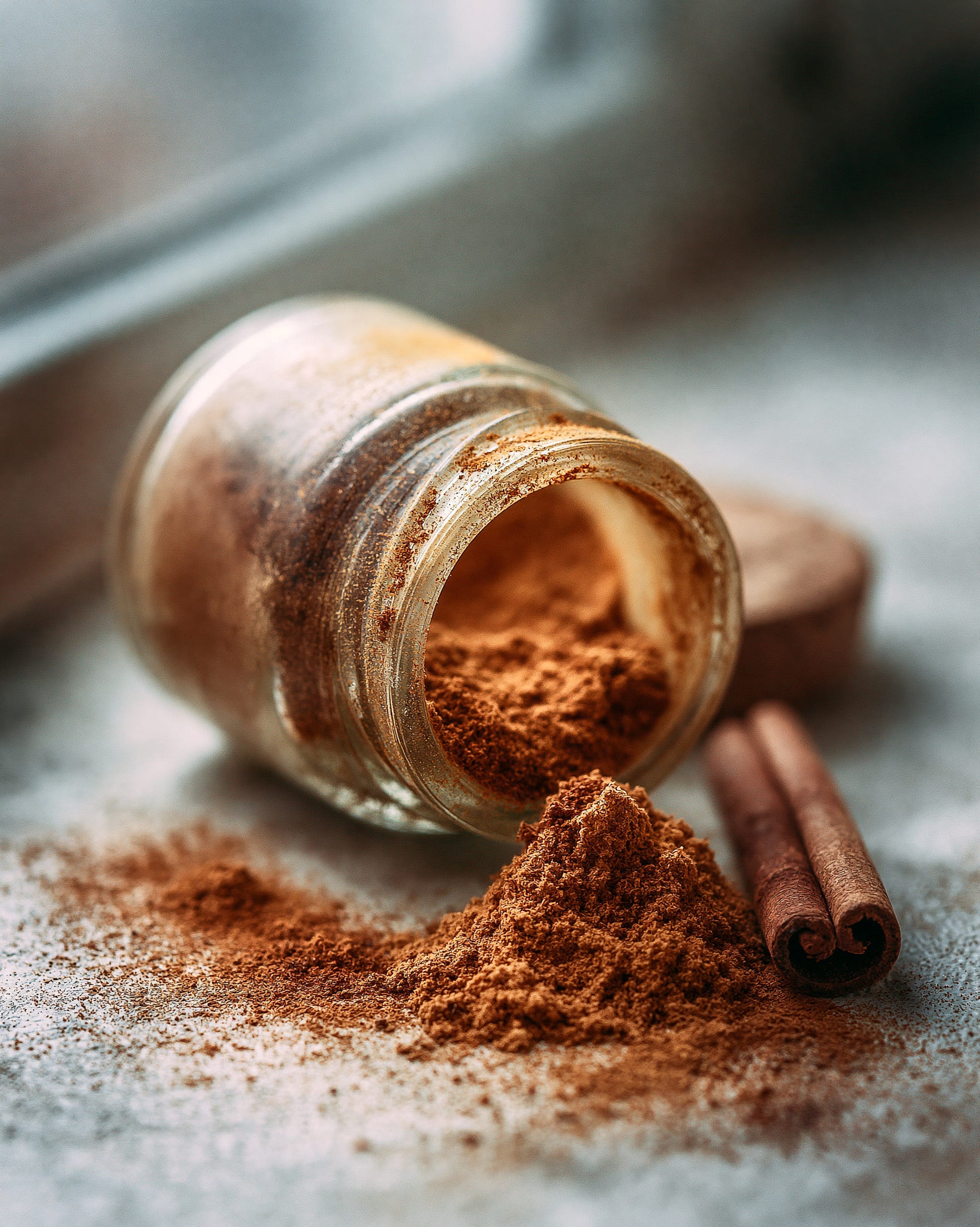
I’ll continue to rabbit hole this, but for now it’s bye-bye cinnamon.
Ground flaxseed
Flaxseed’s fatty acids oxidize quickly once ground and exposed to air, room temperature, and light — rancidity that’s both a taste problem and a nutrient-quality problem. Fresh-grinding in a spice-and-nut grinder weekly and refrigerating is standard food-science practice for ground flax, not an idiosyncrasy. I store the whole seeds in the freezer.
On the health-claim side, flaxseed lignans are associated with reduced breast cancer risk in observational studies, and some trials show modest glycemic and lipid benefits. At 2 tablespoons (14g) daily, this bowl lands right at the entry point of that evidence base, and it's in range of the dose (16g/day) shown to meaningfully improve blood sugar and A1C in one trial.
It's still well short of the ≥30g/day sustained for 12+ weeks that the strongest lipid-lowering and lignan-cancer-risk trial data used — nearly all of that higher-dose data comes from diabetic or postmenopausal populations studied at 2-4x this amount — so I'm not claiming this dose delivers those specific outcomes. But 2 tbsp is no longer just a fiber-and-micronutrient afterthought; it's a real, evidence-consistent daily dose in its own right.
Similar to cinnamon, flaxseeds have been found to contain elevated levels of cadmium, which it absorbs from the soil. This brand was flagged in multiple secondary write-ups as the standout low-cadmium performer and is ConsumerLab’s Top Pick for whole flaxseed.
Strength isn’t on my list as its own line item, but it’s the mechanism that permits the physically demanding stuff I want to still be doing decades from now. That won’t happen if I let the muscle mass slide the way fifty-five-year-olds are statistically prone to.
That’s what weight training is actually for, and this bowl is the unglamorous support system behind it: eating in a way that doesn’t leave me hunting for a snack an hour later, giving the training and my body the raw materials they need, and, equally important, my gut the ability to work correctly.
It’s the same simple logic as the walk, the oral care, the water — stack enough of them and they hold up something bigger than themselves. I wish that was Cookies & Cream, but alas…
Studies Cited
Holt SHA, Brand Miller JC, Petocz P, Farmakalidis E. A satiety index of common foods. Eur J Clin Nutr. 1995;49(9):675-690.
https://pubmed.ncbi.nlm.nih.gov/7498104/
Chandler-Laney PC, Morrison SA, Goree LL, Ellis AC, Casazza K, Desmond R, Gower BA. Return of hunger following a relatively high carbohydrate breakfast is associated with earlier recorded glucose peak and nadir. Appetite. 2014;80:236-241.
https://pmc.ncbi.nlm.nih.gov/articles/PMC4204795/Liu Y, Mei H, Xue L, et al., Speakman JR. Testing the carbohydrate-insulin model: Short-term metabolic responses to consumption of meals with varying glycemic index in healthy adults. Cell Metab. 2025;37(3):606-615.e3.
https://www.cell.com/cell-metabolism/fulltext/S1550-4131(25)00015-4Fazzino TL, Rohde K, Sullivan DK. Hyper-Palatable Foods: Development of a Quantitative Definition and Application to the US Food System Database. Obesity. 2019;27(11):1761-1768.
https://onlinelibrary.wiley.com/doi/abs/10.1002/oby.22639DiFeliceantonio AG, Coppin G, Rigoux L, Edwin Thanarajah S, Dagher A, Tittgemeyer M, Small DM. Supra-Additive Effects of Combining Fat and Carbohydrate on Food Reward. Cell Metab. 2018;28(1):33-44.e3.
https://www.cell.com/fulltext/S1550-4131(18)30325-5Chilibeck PD, Kaviani M, Candow DG, et al. Effect of creatine supplementation during resistance training on lean tissue mass and muscular strength in older adults: a meta-analysis. Open Access J Sports Med. 2017;8:213-226.
https://pmc.ncbi.nlm.nih.gov/articles/PMC5679696/Kreider RB, Kalman DS, Antonio J, et al. International Society of Sports Nutrition position stand: safety and efficacy of creatine supplementation in exercise, sport, and medicine. J Int Soc Sports Nutr. 2017;14:18.
https://doi.org/10.1186/s12970-017-0173-zU.S. FDA. Food Labeling: Health Claims; Soluble Dietary Fiber From Certain Foods and Coronary Heart Disease (barley beta-glucan interim final rule). Federal Register. December 23, 2005.
https://www.federalregister.gov/documents/2005/12/23/05-24387/food-labeling-health-claims-soluble-dietary-fiber-from-certain-foods-and-coronary-heart-diseaseWoehrlin F, Fry H, Abraham K, Preiss-Weigert A. Quantification of Flavoring Constituents in Cinnamon: High Variation of Coumarin in Cassia Bark from the German Retail Market and in Authentic Samples from Indonesia. J Agric Food Chem. 2010;58(19):10568-10575.
https://pubmed.ncbi.nlm.nih.gov/20853872/European Food Safety Authority. Opinion on Coumarin, tolerable daily intake of 0.1 mg/kg bw/day. EFSA Journal. 2004;104:1-36 (reaffirmed 2008).
Rubin T. Chart Comparing Independent, Third-Party Laboratory Test Results of Popular Cinnamon Products. Lead Safe Mama, LLC.
https://tamararubin.com/2024/12/cinnamon-chart/
Some links in this post are affiliate links, meaning I earn a small commission if you purchase through them — at no extra cost to you. I have a simple rule: I only link to products I actually use myself. Not products I've been sent, not products I've been paid to mention — products that have earned a place in my own routine after my own research. The commission helps keep this publication going. The recommendation is the same either way.
Justin - learning so much on this journey with you. Have ordered quite a few things you have suggested. Thanks for doing all this heavy lifting and sharing it so freely. I look forward to your newsletters in my mailbox. Keep going!! ✨✨✨✨