

Yeah, so it’s the Starbucks Story all over again…
About a year ago I switched from regular chewing gum to a brand sweetened with xylitol after learning how it benefits your teeth, I checked the ingredients, saw the word “natural,” and quickly pressed the order button. I hadn’t researched anything. I’d read a label and told myself a story about it. Stupid is as stupid does.
What I Learned Researching this Field Note
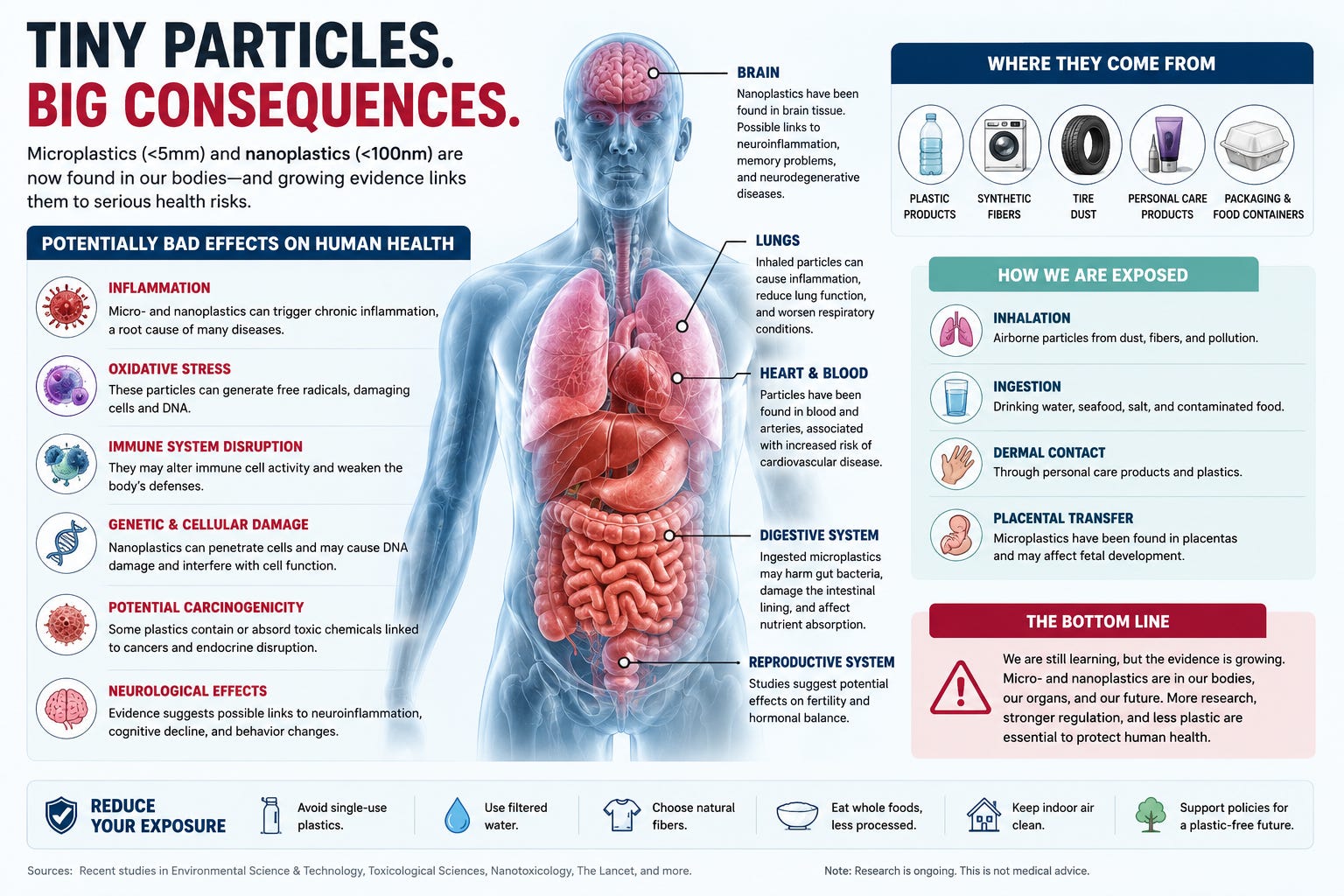
A 2025 UCLA pilot study found that chewing gum sheds an average of 100 microplastic particles per gram — some brands as high as 600 — which means a single large piece can release over 3,000 particles, and a regular chewer working through 160 to 180 sticks a year could be swallowing roughly 30,000 microplastics annually from gum alone.
A separate 2025 study out of Queen's University Belfast, using a more sensitive detection method, measured over 250,000 micro- and nano-plastic particles in one chewer's saliva after a full hour with a single piece.
What’s more, the UCLA study did test five "natural" gum brands — and found they shed comparable microplastics to the synthetic ones — but the researchers never disclosed which brands those were.
What I Actually Do
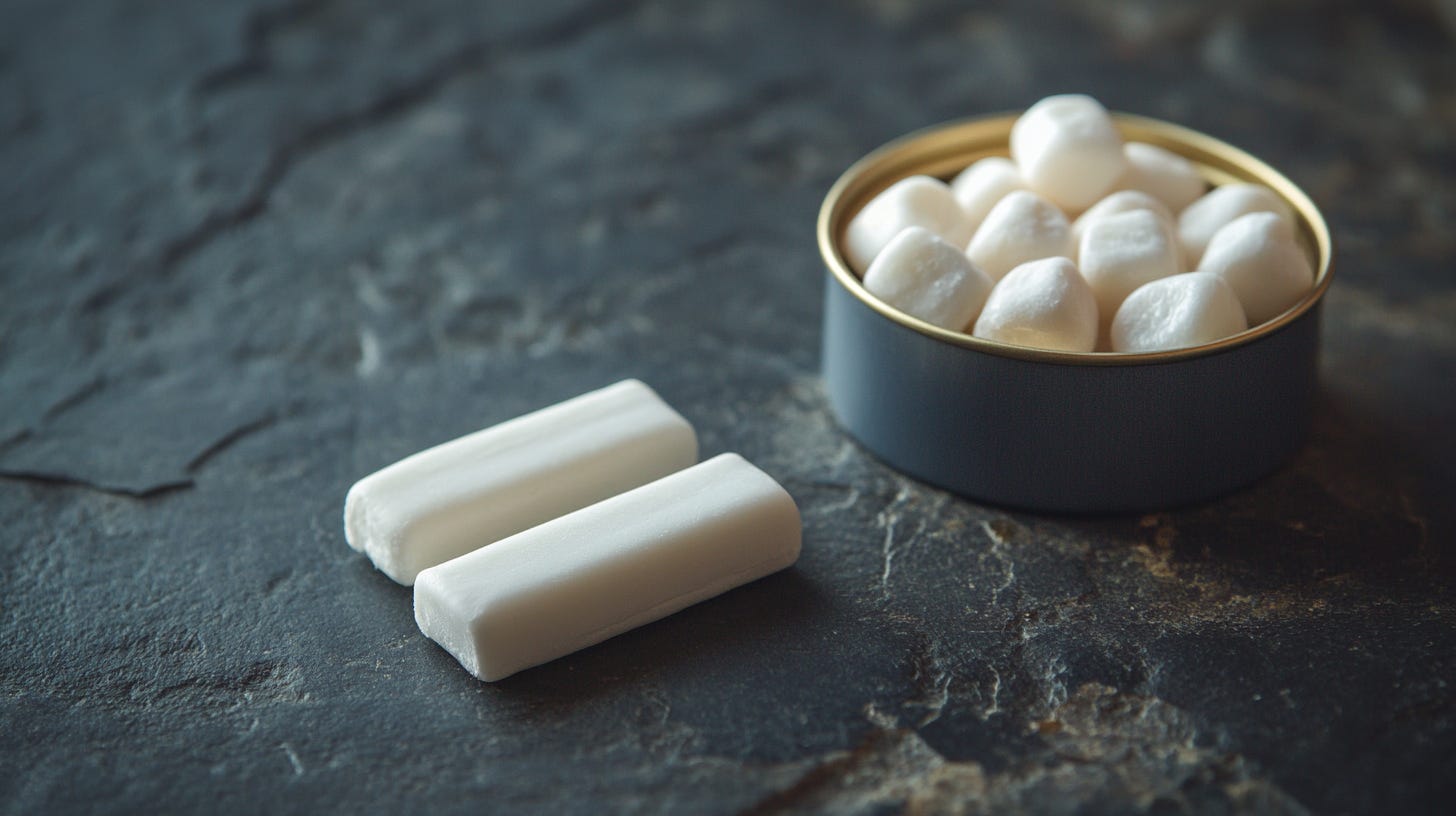
As far a chewing gum goes — nothing. I don’t chew it. Not no mo. To keep up my xylitol routine, I switched to mints.
Rabbit Hole
There's no standardized third-party certification for "plastic-free chewing gum" the way there's USDA Organic for food or TÜV/BPI for compostable packaging. What you'll find instead is self-declared marketing — brands that list a fully disclosed “natural” chicle base instead of the catch-all "gum base" term, and lean on the word "plastic-free" without a certifying body behind that specific claim.
Under FDA rule 21 CFR 172.615, every ingredient inside a gum’s base can be listed under one word: “gum base.” Under this umbrella, approved ingredients include Polyisobutylene, the plastic in tire inner tubes, and polyvinyl acetate, the polymer in wood glue. No brand is required to say which of the 46 approved substances they used.
I searched high and low for a plastic-free gum and found the UK product Milliways. The ingredient list is seven items, chicle (a natural latex sap) is named directly, no “gum base” catch-all. Milliways’ own marketing calls itself “the only gum brand in the UK to be certified biodegradable and plastic-free.”
I looked for the certifying body behind that claim — BPI and TÜV Austria are the two real organizations that certify biodegradability, and I could not find Milliways listed on either registry, on their own site, or in any press coverage I read. Nobody, as far as I can find, has run Milliways through the same saliva analysis UCLA or Belfast ran on the anonymous ten brands. Full ingredient disclosure is real and laudible. “Certified plastic-free” is a claim I can’t verify.
I’m not switching to Milliways. Until a proven third-party tests the actual product it doesn’t go in my mouth on the strength of an unverifiable marketing claim.
Verdict
The correction here is admitting I that bought a story instead of a fact — and I’m not doing that twice in the same piece. Super-stupid is as stupid does repeatedly.
After searching for a xylitol mint that does not contain “natural flavors” — a legal catch-all (like "gum base”) that can hide dozens of undisclosed compounds behind one vague term —
I landed on Peppersmith, a well-established UK brand with flavoring (in this case mint oil) sourced from a named single farm in Hampshire, England — steam-distilled and disclosed, not sourced-and-blended-from-unnamed-suppliers the way "natural flavors" legally allows.
Trying, probably failing, to be less stupider.
Studies Cited
Lowe, L., Leonard, J., & Mohanty, S.K. (2025). Ingestion of microplastics during chewing gum consumption. Journal of Hazardous Materials Letters, 6, 100164. https://doi.org/10.1016/j.hazl.2025.100164
Pant, U., Tate, J., Birse, N., Liu, X., Elliott, C., & Cao, C. (2025). Nanoparticle-on-film SERS for assessing micro- and nanoplastics released into the oral cavity from chewing gum. Journal of Hazardous Materials (publication cited via Queen’s University Belfast press release; DOI unconfirmed — preprint available at SSRN). Preprint: https://papers.ssrn.com/sol3/papers.cfm?abstract_id=4993352 | University release: https://www.qub.ac.uk/News/Allnews/2025/StopchewingNewresearchrevealstheshockingnumberofmicroplasticsinasinglepieceofgum.html
Fox News. “Chewing gum, even ‘natural’ ones, can release microplastics in saliva, study says” (confirms UCLA researchers did not disclose the ten tested brand names). https://www.foxnews.com/food-drink/chewing-gum-may-release-thousands-microplastics-saliva-study-says
U.S. Food and Drug Administration. 21 CFR § 172.615 — Chewing gum base (primary regulatory text; source for the 46-substance count and open GRAS clause). https://www.ecfr.gov/current/title-21/chapter-I/subchapter-B/part-172/subpart-G/section-172.615
Milliways company claims (”certified biodegradable and plastic-free”) sourced from Milliways’ own site and press releases, not independently verified: https://www.milliwaysfood.com/pages/marks-spencer-meets-milliways | https://www.prnewswire.com/news-releases/milliways-plastic-free-chewing-gum-brand-raises-3-million-to-accelerate-us-growth-302673344.html
Peppersmith. Ingredient sourcing claims (Hampshire farm, steam-distilled mint oil) sourced from the brand’s own site, not independently verified: https://peppersmith.co.uk/pages/ingredients
Some links in this post are affiliate links, meaning I earn a small commission if you purchase through them — at no extra cost to you. I have a simple rule: I only link to products I actually use myself. Not products I've been sent, not products I've been paid to mention — products that have earned a place in my own routine after my own research. The commission helps keep this publication going. The recommendation is the same either way.
and on to the mints I go! Big Coffee Drinker.
It’s totally unbelievable to me that a regular gum chewer could potentially ingest tens of thousands of microscopic plastic particles every year…. HOW IS THAT NOT NEWS?!?